Göbekli Tepe & Sanliurfa City Tour 2 Days 1 Night
€890.00


Walk among carved stone pillars more than 11,000 years old at Göbekli Tepe and Karahan Tepe, the Neolithic sites that changed what we know about early humans.
See ToursSet on a ridge in the Germuş Mountains northeast of Şanlıurfa, Göbekli Tepe dates back to around 9600 BCE, making it more than 11,000 years old. Hunter-gatherers raised circular enclosures ringed by massive T-shaped limestone pillars, many carved with foxes, wild boar, snakes and vultures, at a time when pottery was unknown and farming was only just emerging. A UNESCO World Heritage Site, it has reshaped debates about how religion, community and settled life began. Together with Karahan Tepe and the wider Taş Tepeler, or Stone Hills, group of sites, it forms one of the most important Neolithic landscapes anywhere.
Most trips to Göbekli Tepe start in Şanlıurfa and run as half-day or full-day trips, pairing the visitor center exhibition with a walk along the raised walkways beneath the site's protective roof. Many itineraries add Karahan Tepe, the beehive houses of Harran or the Şanlıurfa Archaeology Museum, home to the famous Urfa Man statue. Plan at least one full day for the archaeology alone, and two if you also want to explore the city. On TurTalebi you can compare Göbekli Tepe trips run by local firms and pay securely by card.
Tours run by local firms in the area. Pick a date, see the price and book securely by card.
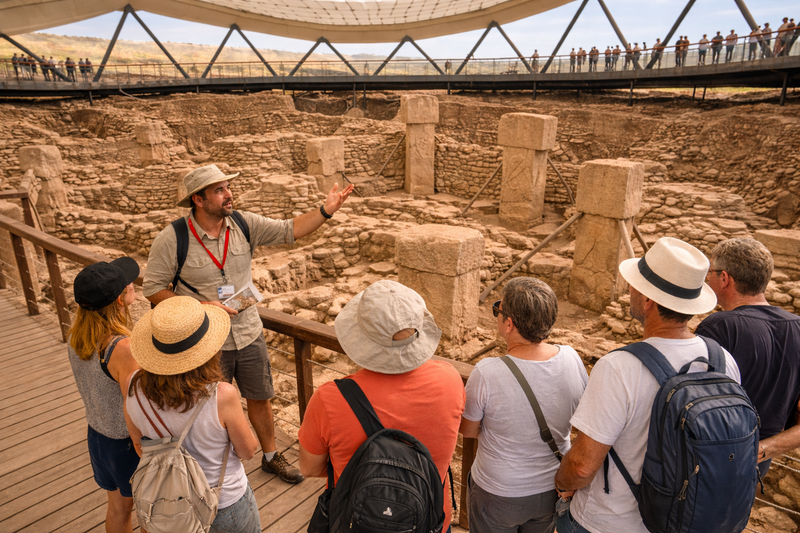
Raised walkways under a sweeping protective roof let you look down into the circular enclosures and their carved pillars. Look for the pillar carved with a vulture, one of the site's best-known and most debated finds.
Start at the visitor center, where displays explain how the site was discovered, how the enclosures were built and what researchers think the carvings may mean, before you head up to the hilltop.
In the Tektek Mountains east of Şanlıurfa, Karahan Tepe is known for a rock-cut chamber where a carved human head emerges from the wall, surrounded by standing stones. It reveals another side of the same era.
Taş Tepeler is the umbrella name for a cluster of Neolithic sites around Şanlıurfa. Many are active excavations that are not always open to visitors, so a local guide is the best way to know what you can see.
The city's archaeology museum displays the Urfa Man statue alongside finds from Göbekli Tepe and other Neolithic sites in the region, giving useful context before or after your visit to the hill.
Often added to a Göbekli Tepe day tour, Harran's conical mud-brick houses and the ruins of its medieval university show how much later history unfolded on the very same plain.
Spring (March to May) and autumn (September to November) are the best times to visit, with mild temperatures and green hills in spring. Summers in Şanlıurfa are intensely hot, often above 40°C (104°F), and there is very little shade at the site, so go first thing in the morning. Winters are mild but can bring rain and chilly winds. Weekends and Turkish public holidays draw noticeably bigger domestic crowds, so a weekday visit is usually calmer.
The nearest airport is Şanlıurfa GAP Airport, with regular domestic flights from İstanbul and Ankara. Göbekli Tepe lies northeast of central Şanlıurfa, about half an hour away by car. Public transport options are limited, so most visitors arrive on an organized tour, by taxi or in a rental car. You can also fly into Gaziantep and drive to Şanlıurfa in about two hours, combining both cities on a wider southeastern Türkiye itinerary.