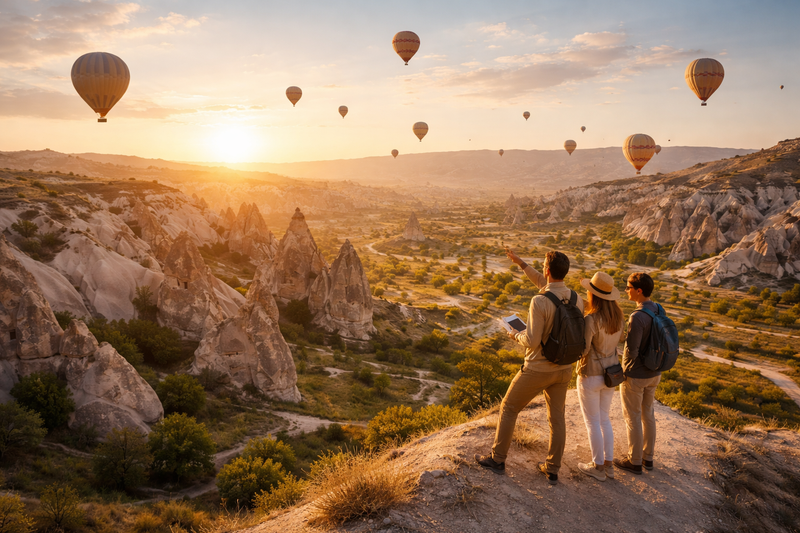
Cappadocia, Pamukkale Tour
€950.00


Fairy chimneys, underground cities and endless steppe horizons: Central Anatolia links Cappadocia, Konya, Ankara and the Salt Lake on one of Türkiye's richest history routes.
See ToursCentral Anatolia is a high plateau at the heart of Türkiye, shaped by open steppe, volcanic peaks and salt lakes. Its history runs remarkably deep, from Çatalhöyük, one of the earliest known towns, to the Hittites, Byzantine rock-cut churches and Seljuk madrasas. Cappadocia's fairy chimneys and underground cities, Konya's Mevlana Museum, and Ankara's Anıtkabir and Museum of Anatolian Civilizations are the region's icons. Göreme and Çatalhöyük are UNESCO World Heritage Sites, while the white expanse of the Salt Lake and the green canyon of Ihlara add a natural counterpoint.
Most tours here center on Cappadocia, where a typical program includes a hot air balloon flight, Göreme Open-Air Museum, the Derinkuyu or Kaymaklı underground city and a walk through Ihlara Valley. Culture tours from Ankara cover Anıtkabir and the Museum of Anatolian Civilizations, while Konya trips focus on the Mevlana Museum and a whirling dervish ceremony. Three to five days lets you add Hattusa and the Salt Lake. Through TurTalebi you can compare itineraries from local firms and pay securely by card.
Tours run by local firms in the area. Pick a date, see the price and book securely by card.

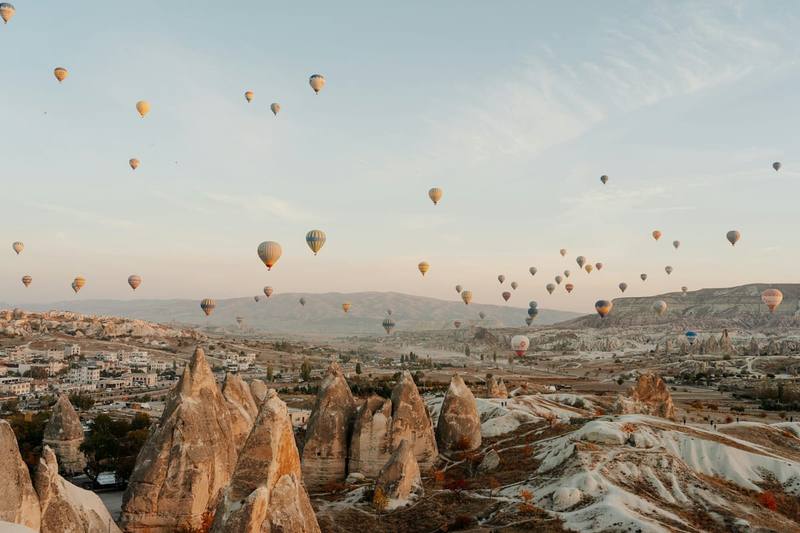
The region's star, with fairy chimneys, rock-cut churches and underground cities. Sunrise balloon flights depend on weather and wind, and the authorities can cancel them on the morning itself.
The green-tiled dome over Rumi's tomb is Konya's emblem. The city also has fine Seljuk monuments, and whirling dervish ceremonies are held there on set days.
Anıtkabir, Atatürk's monumental mausoleum, and the Museum of Anatolian Civilizations, with finds from the Paleolithic onward, anchor any visit to the capital. The old lanes around Ankara Castle are worth a stroll.
The Hittite capital at Boğazkale in Çorum province, with its Lion Gate and the Yazılıkaya rock sanctuary, is a UNESCO World Heritage Site often added to culture tours from Ankara.
Türkiye's second-largest lake shrinks in summer into a dazzling white salt flat. It is a classic stop on the Ankara–Aksaray road for sunset photos and, in season, flamingo watching.
A walking trail follows the Melendiz stream through a deep canyon in Aksaray, passing frescoed churches carved into the rock and ending with a riverside break in the village of Belisırma.
Central Anatolia has a continental climate, with hot, dry summers and cold, snowy winters. April to June and September to October are the most pleasant times to travel, with mild days and generally steadier conditions for balloon flights. Summer days are hot, but nights cool down sharply. Winter brings snow-dusted fairy chimneys and quiet museums, though mornings can be freezing and weather cancels balloon flights more often.
Ankara is the region's transport hub, with Esenboğa Airport and high-speed trains linking it to Istanbul and Konya. For Cappadocia, fly into Nevşehir Kapadokya or Kayseri Erkilet Airport. A classic route starts in Ankara with Anıtkabir and its museums, skirts the Salt Lake on the way to Cappadocia, then continues after a few days via Ihlara Valley to Konya. Hattusa makes an extra day trip east of Ankara.