Cappadocia, Pamukkale Tour
€950.00


Snow-white travertine terraces, a thermal pool scattered with ancient columns and the grand theater of Hierapolis: see Pamukkale on a day trip or an overnight stay.
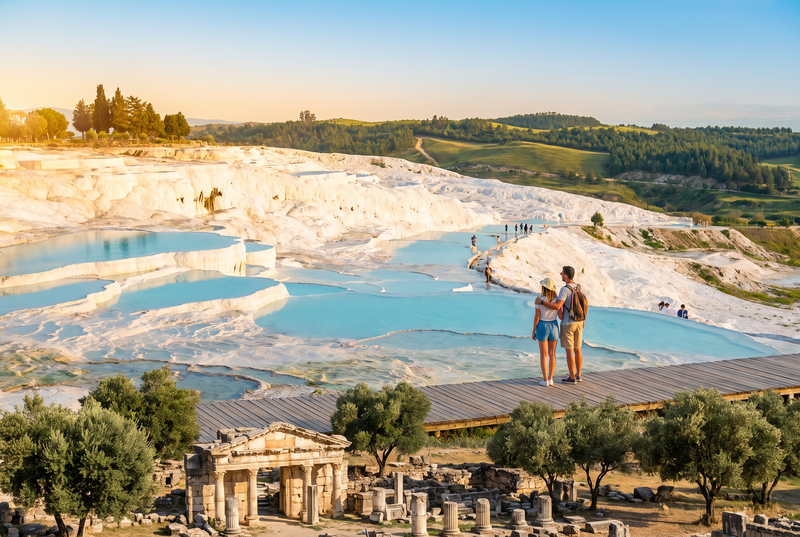
See ToursPamukkale, meaning cotton castle in Turkish, is famous for its brilliant white travertine terraces, built up over millennia by mineral-rich thermal springs flowing down a hillside in Denizli province. The shallow pools step down the slope and shift color with the light through the day. Right above them lies Hierapolis, founded by the kings of Pergamon and later a celebrated Roman spa town, with a restored theater, a sprawling necropolis and the Martyrium of St. Philip. Hierapolis-Pamukkale is a UNESCO World Heritage Site recognized for both its natural and cultural value.
Typical Pamukkale tours combine a barefoot walk on the travertines, a guided visit to Hierapolis and a swim in the Antique Pool, and some add the ruins of Laodicea and the red springs of Karahayıt. Long day trips run from the coastal resorts, but staying a night lets you enjoy sunset on the terraces and avoid the midday crowds. Sunrise hot air balloon flights over the travertines can also be added, always subject to the weather. Through TurTalebi you can compare tours from local firms in the Pamukkale area and book securely by card.
Tours run by local firms in the area. Pick a date, see the price and book securely by card.
These white terraces of calcium deposits must be walked barefoot to protect them. Along the marked path you can dip your feet into warm, shallow pools and take in views over the plain below.
Founded under the kings of Pergamon and famed in Roman times for its healing waters, Hierapolis has a restored theater, the colonnaded Frontinus Street and one of the largest necropolises in Anatolia. The Martyrium of St. Philip sits on the hill above.
Swim in warm thermal water among ancient marble columns that toppled into the pool during an earthquake. Legend links the pool to Cleopatra; bring a swimsuit and towel if you plan to take a dip.
Just north of Denizli, Laodicea was a large Roman city and home to one of the Seven Churches named in the Book of Revelation. Its colonnaded streets, theaters and ongoing excavations make a quiet add-on to Pamukkale.
A few kilometers north of Pamukkale, the spa village of Karahayıt has iron-rich thermal water that leaves red and orange deposits. It suits travelers looking for a relaxing thermal stay.
Balloons rising at first light give you a bird's-eye view of the white terraces and Hierapolis. Flights depend on wind and visibility and may be canceled by the authorities that morning, so keep your plans flexible.
Spring (April and May) and autumn (September and October) are the best times to visit Pamukkale, with mild temperatures for walking the terraces. In summer the white surface reflects the sun intensely, so avoid the middle of the day. Winter can make barefoot walking chilly, but the warm thermal pool and thinner crowds have their own appeal. In any season, the terraces look their most beautiful at sunset.
The nearest airport is Denizli Çardak Airport, roughly an hour's drive from Pamukkale. Denizli city is about 20 kilometers away, and minibuses run regularly from its bus station to Pamukkale village. Trains connect İzmir with Denizli. Day tours from Antalya, Fethiye, Kuşadası and Bodrum include the transfer, which makes them an easy option if you are staying on the coast.